Found While Wandering
A Field Note on faith, detours, and the relationship that kept finding me
I didn’t grow up in a particularly religious household. My mother would occasionally take us to an Episcopal church, where Sunday school equipped me with skills I have never stopped using: prize-winning macaroni art on paper plates.
I say that with genuine affection. Something was being planted, even then.
The outside looking in
For twelve years of primary school, I attended Catholic school — not because I was Catholic, but because my parents were convinced it was a better education. My wish to attend public school was noted and overruled.
Being a non-Catholic in Catholic school in the 1970s and 80s meant being on the outside of something without quite understanding why. The Catholic kids participated in sacraments I wasn’t permitted to share. I didn’t understand the theology behind that exclusion — I just felt it. And it landed, as these things do in children, as confirmation of something I already half-believed: that there was something wrong with me. That I didn’t belong.
I understand it now, as an adult. It was theology, not rejection. Nothing personal. But the wound was personal, even if the intent wasn’t — and that’s how it tends to work.
The result was that I grew up with a narrow and somewhat bruised understanding of who God and the church was, and I wanted nothing to do with any of it. Looking back, I was agnostic. I just didn’t have the word for it yet.
The youth group with the candle
In high school, I stumbled into a youth group that turned out to be something different from what I expected.
We met weekly. Someone would light a candle, and whoever held it had the floor — to share whatever they wanted, for as long as they needed, without crosstalk or feedback. No questions. No advice. Just witnessing.
People were honest in that room in a way I had never seen before. They said true things, with tears, without performance. I found it remarkable. I had never been in a space where you could take off the mask and simply be real with one another.
That experience shaped me more than I understood at the time. The groups I facilitate today — the safety I try to create, the quality of witnessing I try to offer — trace directly back to that room, that candle, those honest shares.
Oh, and there was also a girl named Michele, whose presence was a significant draw. Sadly, I had no idea how to talk to her. Sigh.
Isle Royale
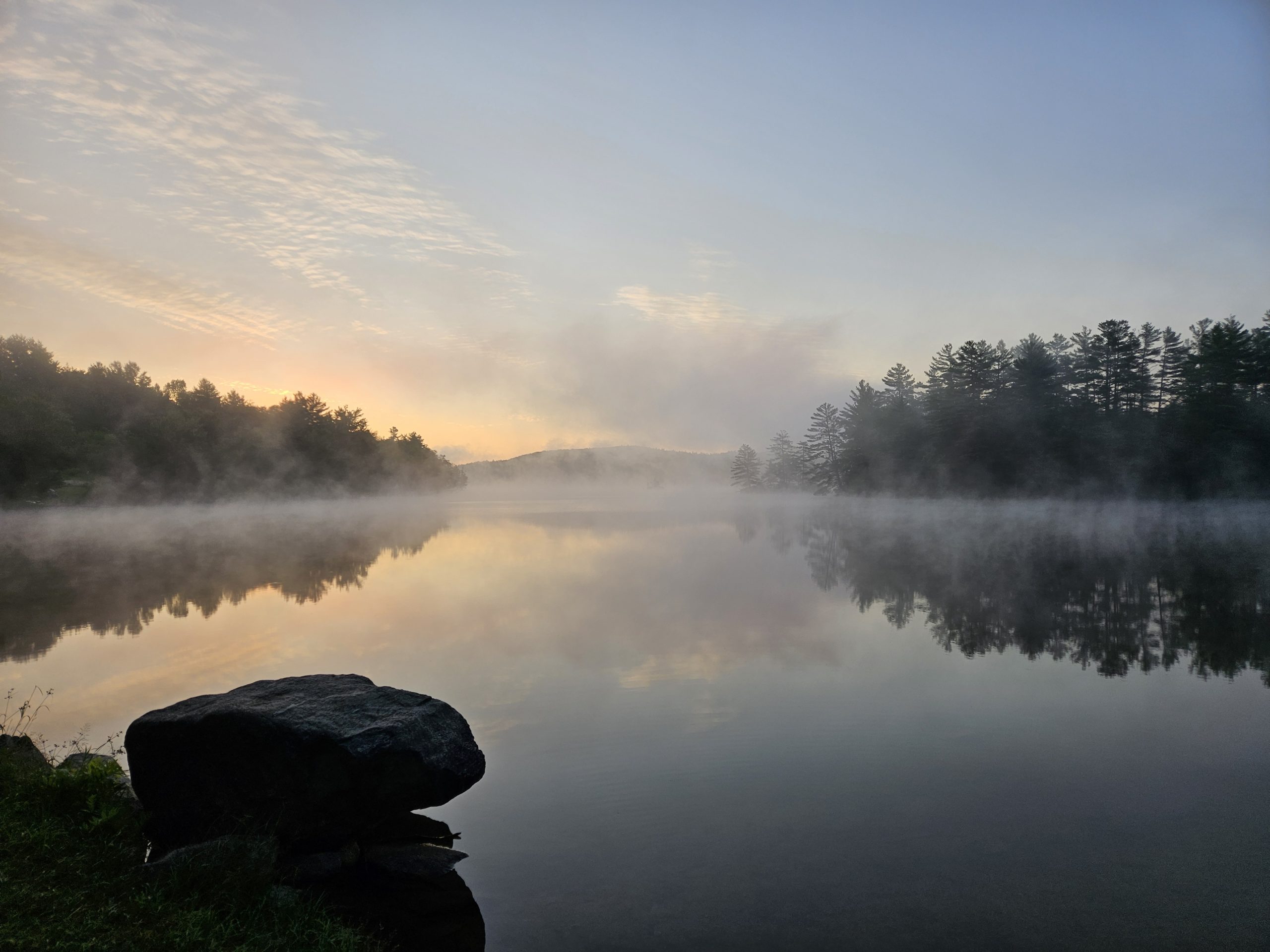
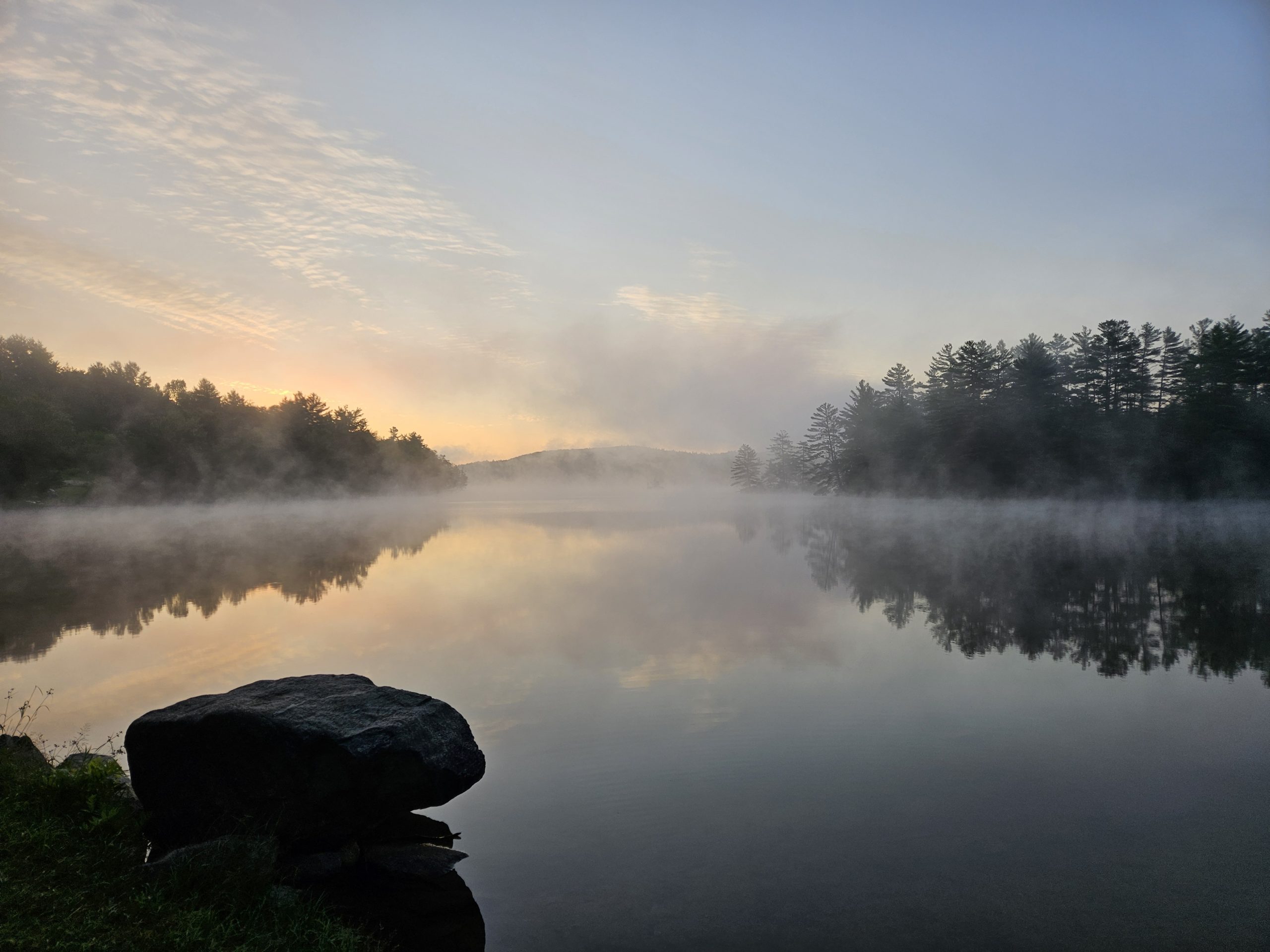
After my first year of college, I spent the summer working at Isle Royale National Park — my favorite place on the planet, then and now.
June 21, 1991. Walking alone through the forest, surrounded by a beauty that felt almost unbearable, something happened. I encountered something I could only name as God.
I’m not going to try to explain it more precisely than that. It was an encounter, not an argument. It was relational, not theological. From that day forward, I had a higher power — not a concept, not a tradition, but a relationship. Personal, specific, mine.
That summer was a time of many firsts. One of them was keeping a journal. The journal from that summer is one of my most prized possessions.
That relationship has been the quiet center of my adult life ever since. It has been tested. It has gone through seasons of distance and silence. But it has never, finally, gone away.
Recovery
A few years later, I entered recovery.
If Isle Royale was where the relationship began, recovery was where it deepened. The twelve-step framework takes the higher power relationship seriously in a way that most religious institutions don’t — it asks you to actually rely on it, daily, in specific and practical ways. That was new for me. And it changed things.
Several years into recovery, I felt what I can only describe as an invitation: go to graduate school to study counseling and theology. I went. The counseling piece made practical sense. The theology piece was purely personal — I wanted to understand more deeply the relationship I was already in. My Master of Divinity was not about becoming clergy. It was about devotion.
On labels
For a long time I called myself a Christian, and meant it.
I’ve grown more careful with that word. Not because the relationship underneath it has changed, but because the label itself has been claimed by versions of faith I don’t recognize — versions that have become vehicles for exclusion, nationalism, and the marginalization of vulnerable people. That’s not the faith I know. So I’ve loosened my grip on the label while holding more tightly to the relationship underneath it.
I place high value on the contemplative and mystical nature of faith. The interior life. The willingness to sit with mystery rather than demand resolution. After all, if we have certainty and full understanding, it isn’t really faith.
What I believe most deeply is this: the relationship is more durable than the label. The encounter in the forest is more real than any creed. And whoever or whatever it is that I met on Isle Royale that June day has been remarkably patient with my long, winding, often confused journey toward understanding. My beliefs have changed a lot over time — so much so that I’m not sure my faith fits neatly into any label. My faith is deeply personal and intensely intimate.
What this means for the work
I tell this story because I think it matters that you know it.
When you come to me with your faith questions — your doubts, your deconstructions, your grief over a tradition that wounded you, your tentative sense that something might be there even though you can’t name it — you are not coming to someone who has it figured out. You are coming to someone who has been wandering this territory for decades, who knows what it is to be on the outside looking in, who knows what it is to be found by something you weren’t looking for, and who has learned to trust the relationship more than the map.
Every person’s spiritual journey is their own. I have no agenda for yours. What I can offer is company, and the kind of witnessing I first encountered in a room with a candle, decades ago.
You can read more about what spiritual work looks like in practice on the Faith & Spirituality page.
There’s also a companion Field Note about a specific chapter of this journey — when grief interrupted the connection for years, and what it took to find it again: When the Connection Went Dark.
Or reach out to begin a conversation.