The Wall.
Inspired by Roger Waters & Pink Floyd
The idea behind this work didn’t come from a textbook. It came from a rock album.
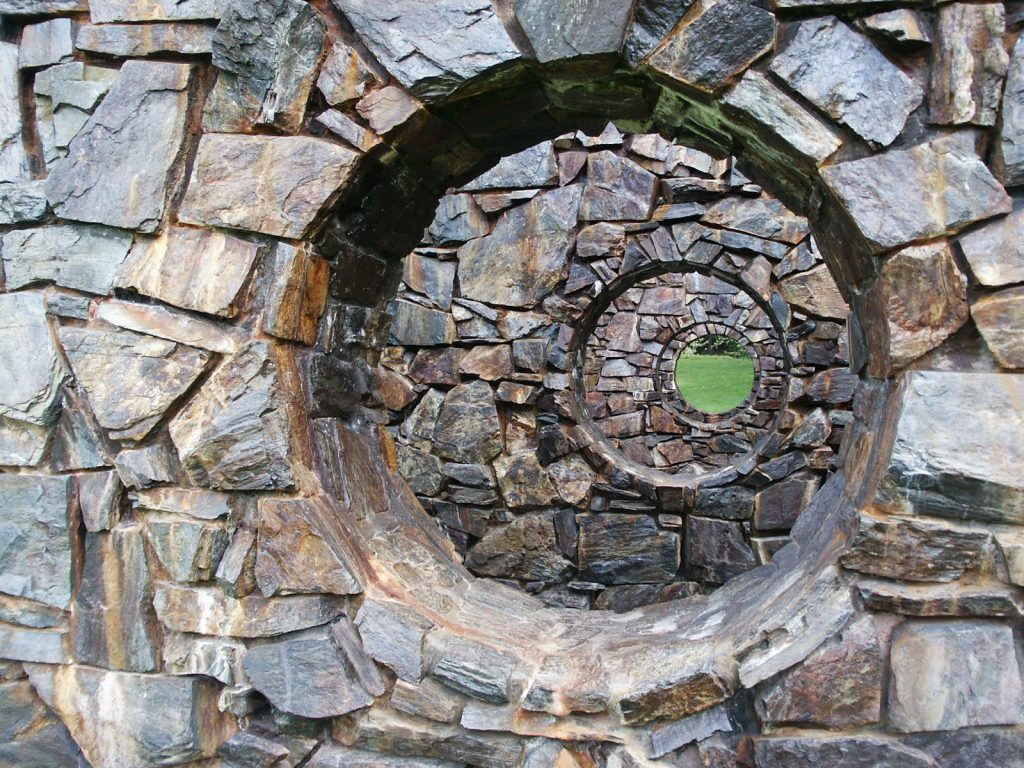
In 1979, Roger Waters of Pink Floyd released The Wall — a concept album that tells the story of a character named Pink, whose father is killed in the war when Pink is just a boy. His mother, trying to protect him from further pain, smothers him. School is shaming. Relationships wound him. Life keeps delivering hurt, and Pink — like any child without adequate support — does the only thing he can: he builds a wall. Brick by brick. Hurt by hurt.
The wall works. It keeps the pain out. But it also keeps everything else out — intimacy, joy, deep connection, the full range of being human. Eventually Pink finds himself comfortably numb: still going through the motions of a life, but completely disconnected from it. From himself. From everyone around him.
I’ve been using this story as a framework for my counseling work for years, because I’ve never found anything that describes the human experience of emotional protection more honestly — or more compassionately. Pink isn’t broken. Pink is human. He did what children do when the adults in their lives can’t adequately protect them or help them navigate pain: he protected himself. So did you. So did I. So did most of us.
We all have a wall.
Think about your own life for a moment. The ways you learned to stay safe. The things you stopped saying, stopped feeling, stopped expecting. The relationships you kept at arm’s length. The parts of yourself you tucked away because they seemed too much, or not enough, or just too risky to show.
That’s not weakness. That’s a wall. And it made sense when you built it. The question counseling asks isn’t “why do you have a wall?” The question is “what would it mean to take it down — carefully, gently, one brick at a time — and find out who’s been waiting on the other side?”
How I work
Every person’s wall is different, which means every person’s path through it is different too. I don’t have a single rigid method — I have a set of tools, and I choose the ones that fit you.
I’m trained in EMDR (Eye Movement Desensitization and Reprocessing), Brainspotting, Lifespan Integration, psychodrama, and other experiential methods. These aren’t just techniques — they’re ways of helping your nervous system process experiences that got frozen in place, often long before you had words for them. Trauma doesn’t live in the story you tell about it. It lives in the body. These approaches work at that level.
I’m also a Certified Sex Addiction Therapist (CSAT), trained under Dr. Patrick Carnes and the International Institute for Trauma and Addiction Professionals. Sex and love addiction, compulsive behaviors, betrayal trauma — these are among the heaviest bricks in a lot of people’s walls, and they respond well to careful, structured, compassionate work.
I must not fear. Fear is the mind-killer. Fear is the little-death that brings total obliteration. I will face my fear. I will permit it to pass over me and through me. And when it has gone past I will turn the inner eye to see its path. Where the fear has gone there will be nothing. Only I will remain.
— Frank Herbert, Dune — Bene Gesserit Litany Against Fear
Ready to start?
The first step is just a conversation. No pressure, no commitment — just a chance to see if it feels like a good fit.
Reach out to begin