Nature & Outdoor Therapy
Taking the work outside, where it often goes deeper
I was one of those kids who absolutely hated summer camp. There was very little I enjoyed about it. But one memory has stayed with me for decades: a 4H camp that did something they called a “sit and watch.” We’d go out into the forest, spread out, each kid claiming a patch of ground, and then we’d just sit. On a log, a rock, or the bare earth. Still. Quiet. Observing.
No agenda. Just attention. Listen to the sounds. Notice the smells. Watch the wildlife. Be a witness to what’s already happening.
I didn’t have language for it then, but that was mindfulness — and it was one of the most genuinely settling experiences I had as a child. Nature offered something the indoor world rarely did: a spaciousness that made it easier to simply be.
Why nature works
Ecotherapy — the practice of doing therapeutic work outside, in nature, incorporating the natural environment into the healing process — is increasingly supported by research. Studies show that nature-based therapy has measurable positive impacts on therapeutic outcomes. Honestly, it seems a little redundant to need research to confirm what most people intuitively know. In the long arc of human history, being indoors is still a relatively new concept. We are wired for this.
For me personally, being outside in the wild forests of New England provides a particular kind of grounding. The trees, the wilderness, the scale of it all — it offers a perspective that whatever I am facing is temporary in the grand scheme of things. That perspective is itself therapeutic.
What outdoor sessions look like
Working outside can take many forms. Walks on trails near the office. Camp chairs set up in a field. A meeting in a nearby park along the river, or in the middle of a dense forest. The options are genuinely unlimited — it’s really a matter of what works for you and what the weather allows.
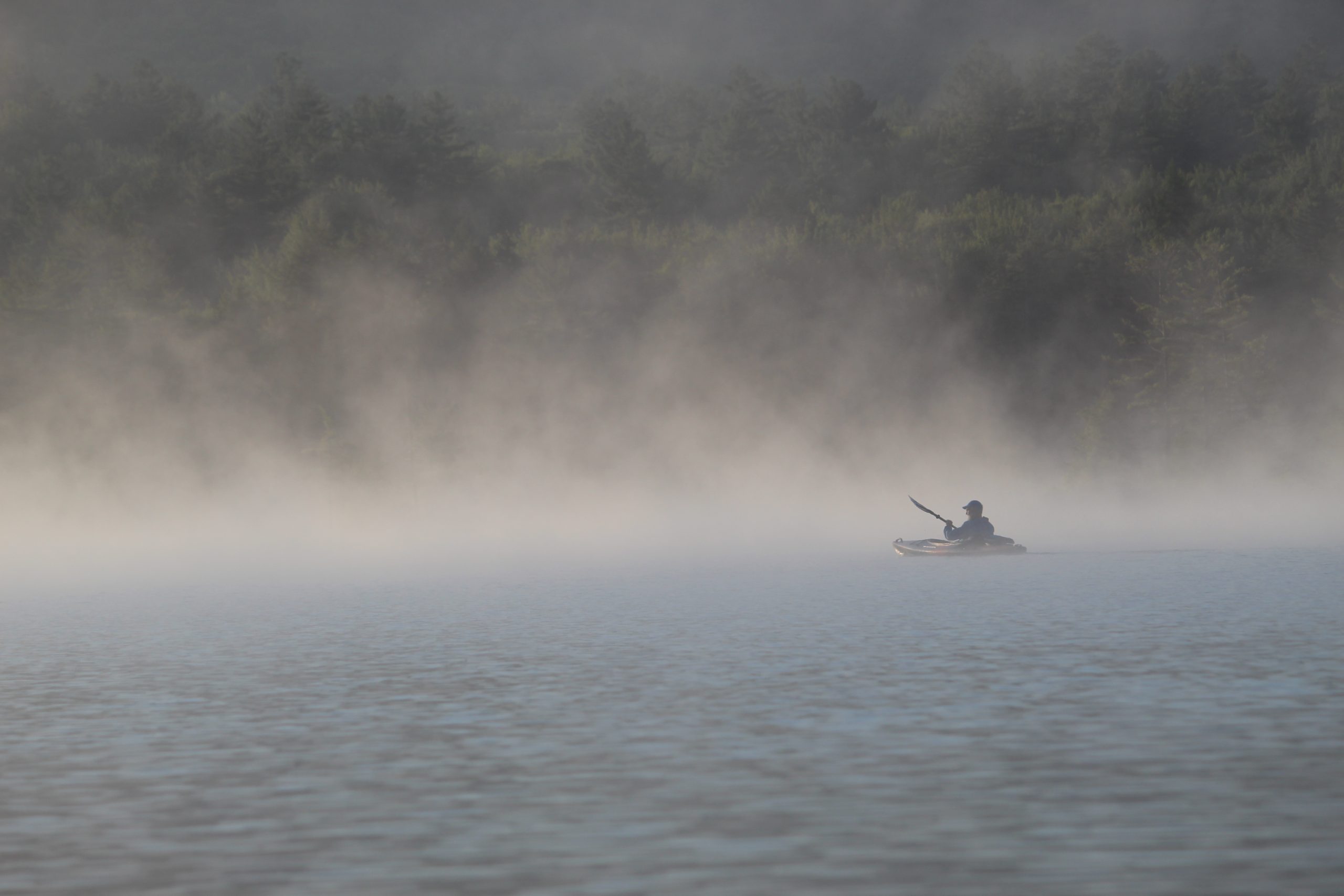
I’ve also been known to meet people for kayaking sessions. There is something about floating on calm, peaceful water — with only loons and other wildlife as company — that makes emotional regulation come more naturally. Hiking sessions, snowshoe sessions, kayaking — all are options worth considering.
We can structure it however makes sense: the occasional outdoor meeting when conditions are right, or always outside if that’s your strong preference. We’ll navigate the weather, the ticks, the mosquitoes, and whatever else Vermont throws at us as they arise.
Animals as part of the work
Nature-based therapy extends beyond the landscape itself. If you’re drawn to animal-assisted work — including equine-assisted therapy — that is also available as part of what we do together.
Ready to take it outside?
If something about this approach resonates — the forest, the water, the open air — let’s find a way to work with it.