Some of the most significant moments in therapy don’t happen through words.
They happen in the space between — in the quality of a presence, the warmth of contact, the simple fact of being with another living creature who isn’t judging or waiting for you to get it together.
That’s what animals bring to this work.
Animal-assisted therapy might bring to mind dogs in an office. Here, it looks a little different.
Meet Lucy.
If you’ve been to the office, you’ve probably already met her. She tends to get there first.
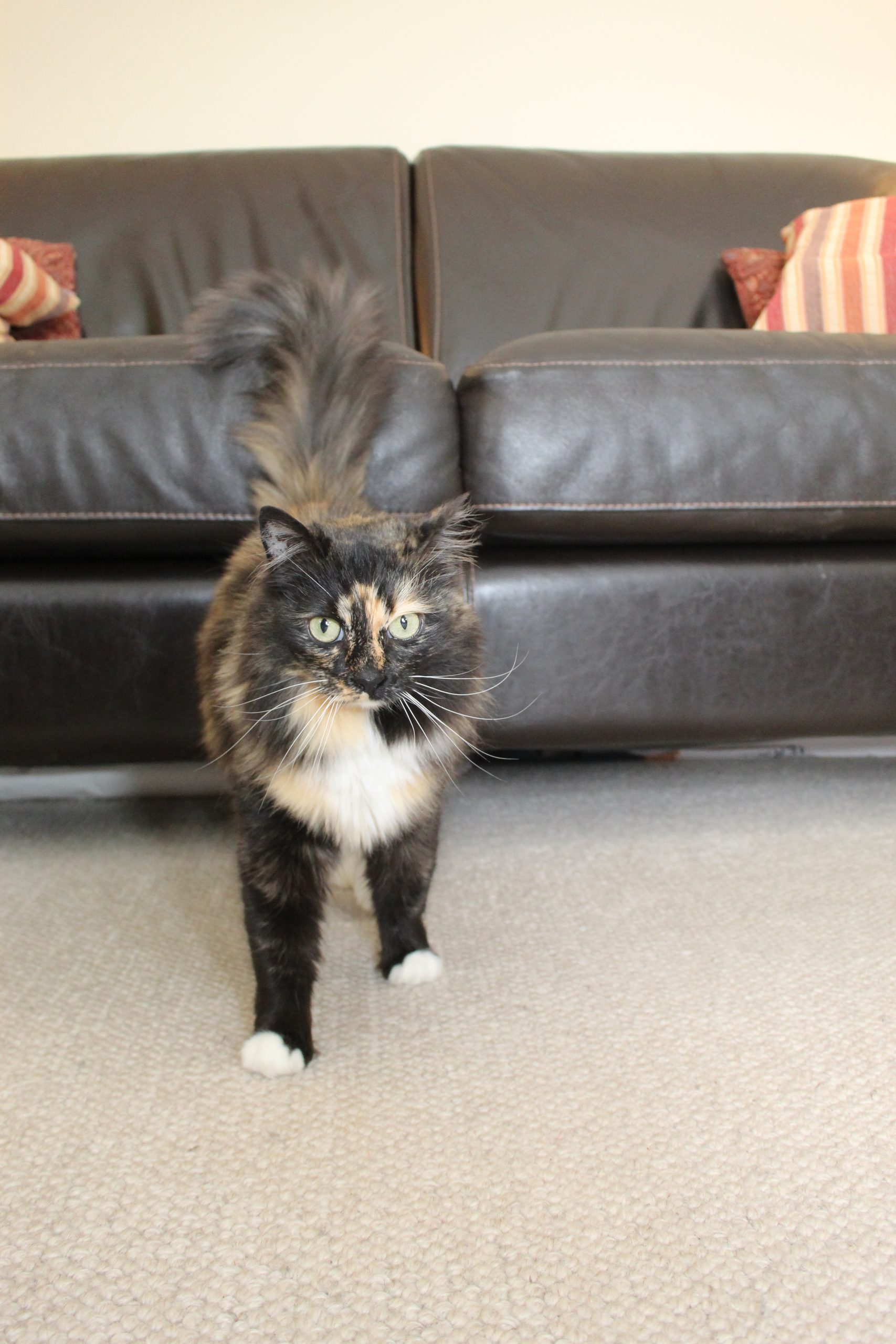
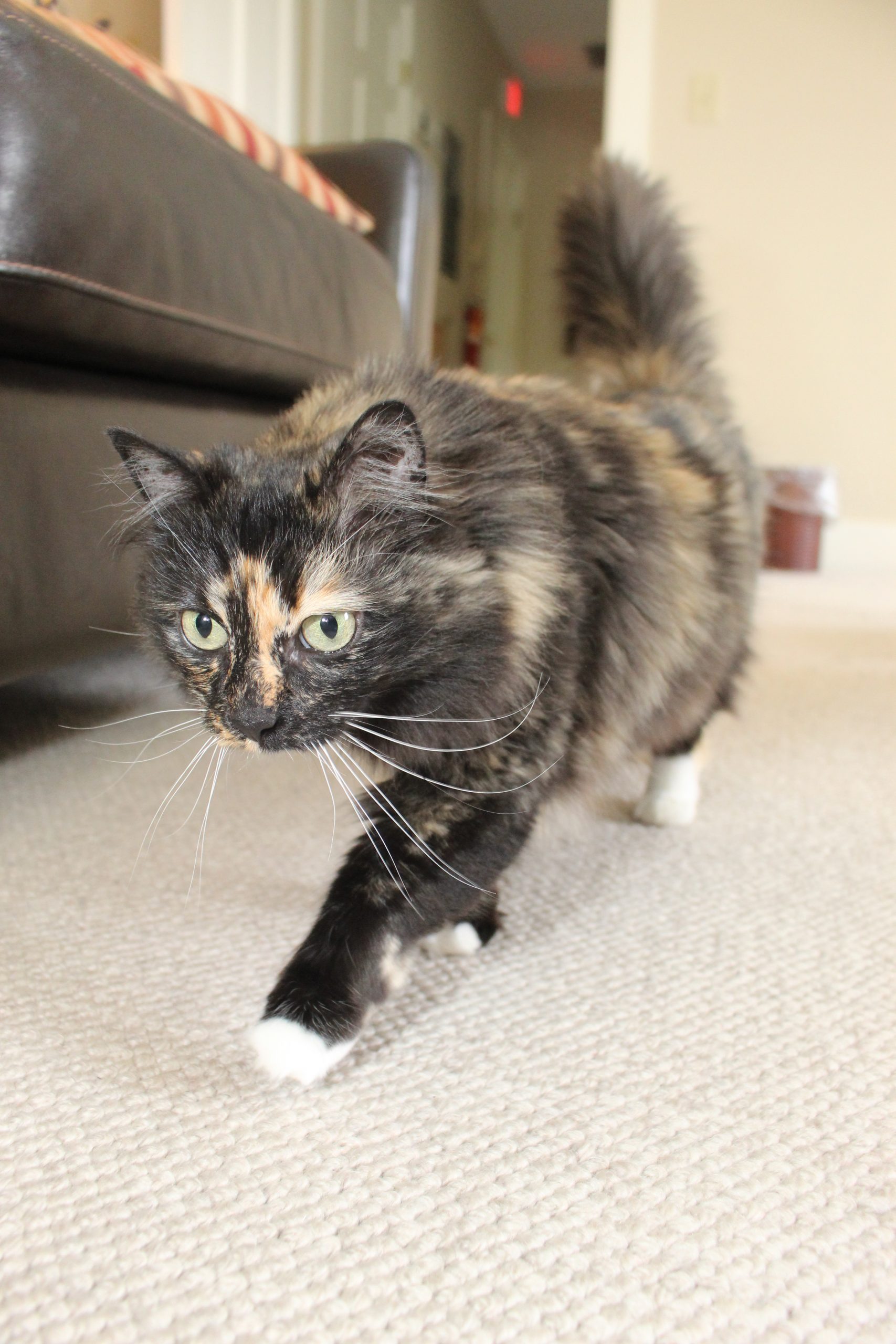
Lucy is a long-haired tortoiseshell with strong opinions and a gift for showing up exactly when she’s needed. When she’s in the office, she’ll likely greet you at the door — fluffy tail straight in the air — with a meow, some sniffs, and a gentle head rub, before leading you down the hall to the room like she’s been expecting you.
From there, she takes it from there in her own way.
Feline interactions are hard to script, which is part of what makes them useful. Lucy reads a room. She might want to play, zoom across the space, or simply settle into your lap and stay. She’s been known to appear at someone’s side right when more vulnerable emotions start to surface — not because she was directed there, but because she noticed.
Her fur is extraordinarily soft and thick. Her presence tends to be grounding in ways that are hard to explain until you’ve experienced it.
Sessions with Lucy might include a mindfulness exercise built around the sensory experience of being with her — noticing the softness of her fur, the sound of her purr, the warmth of her ears. We’re also working on fetch, so depending on when you come in, that may be on the table too.
A note about Nahum.
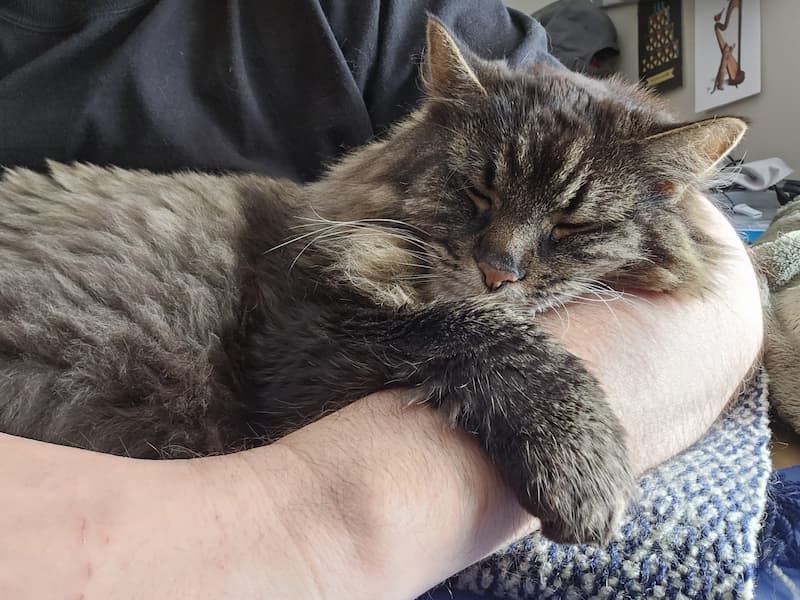 Lucy shares the household with Nahum — a large, mostly-Siberian cat of considerable age and dignity. Nahum has largely retired from office duties, preferring supervisory responsibilities from home. He is not available for appointments, but his influence on the practice is not to be underestimated.
The Horses
Horses are herd animals. Their survival has always depended on their ability to read relationship — to sense tension, attunement, distance, and safety through the most subtle shifts in body language and energy. They are, in a word, relational. And they are remarkably honest about it.
When you interact with a horse, something interesting tends to happen: you show up the way you show up everywhere. The same patterns you bring to your relationships with people — the hesitancy, the overcontrol, the need to manage, the desire to connect — tend to emerge in how you approach a horse. The difference is that the horse responds in real time, without social filters or politeness. That feedback can be illuminating.
This is the heart of equine-assisted mental health work. The horse isn’t a prop or a reward — it’s a relational partner that reflects your contribution to the dynamic, and creates an opportunity to try something different. The horse’s safety and comfort matter as much as yours do. The horse gets a vote in how things unfold, and we pay attention to that vote.
Ground-based activities are the norm — no riding required, and no prior experience with horses is necessary. An appreciation for animals helps. Sessions might include grooming, leading, observing, practicing communication, or simply being present together. Each session flows from your specific therapy goals.
I hold an Equine-Assisted Mental Health Practitioner Certificate from the University of Denver’s Institute for Human-Animal Connection (52 continuing education units, 520 clock hours), representing specialized training in incorporating equine interactions intentionally and ethically into clinical work.
How equine sessions work
Equine sessions take place at a farm about 45 minutes from the office, where we work alongside Aubrey Welch, LCMHC — a licensed clinical mental health counselor who owns the farm and the horses. Aubrey leads the equine counseling sessions; I guide the therapeutic direction and serve in a supporting clinical role. It’s a genuine collaboration between two clinicians who know each other’s work well — you may recognize Aubrey from Vermont Counseling Intensives.
An additional facility fee covers access to the horses, farm, and Aubrey’s involvement. This fee is not reimbursed by Medicare or private insurance. We’ll talk through the specifics when you reach out.
Given the travel involved and the collaborative nature of the arrangement, equine sessions are currently offered as part of intensive work rather than as standalone weekly sessions. If you’re interested in incorporating horse work into a more concentrated therapeutic experience, let’s talk about what that could look like.
Curious about animal-assisted work?
Whether you’re drawn to the idea of working with Lucy or interested in what equine work might offer, reach out and we’ll talk through what makes sense for you.
Begin the conversation