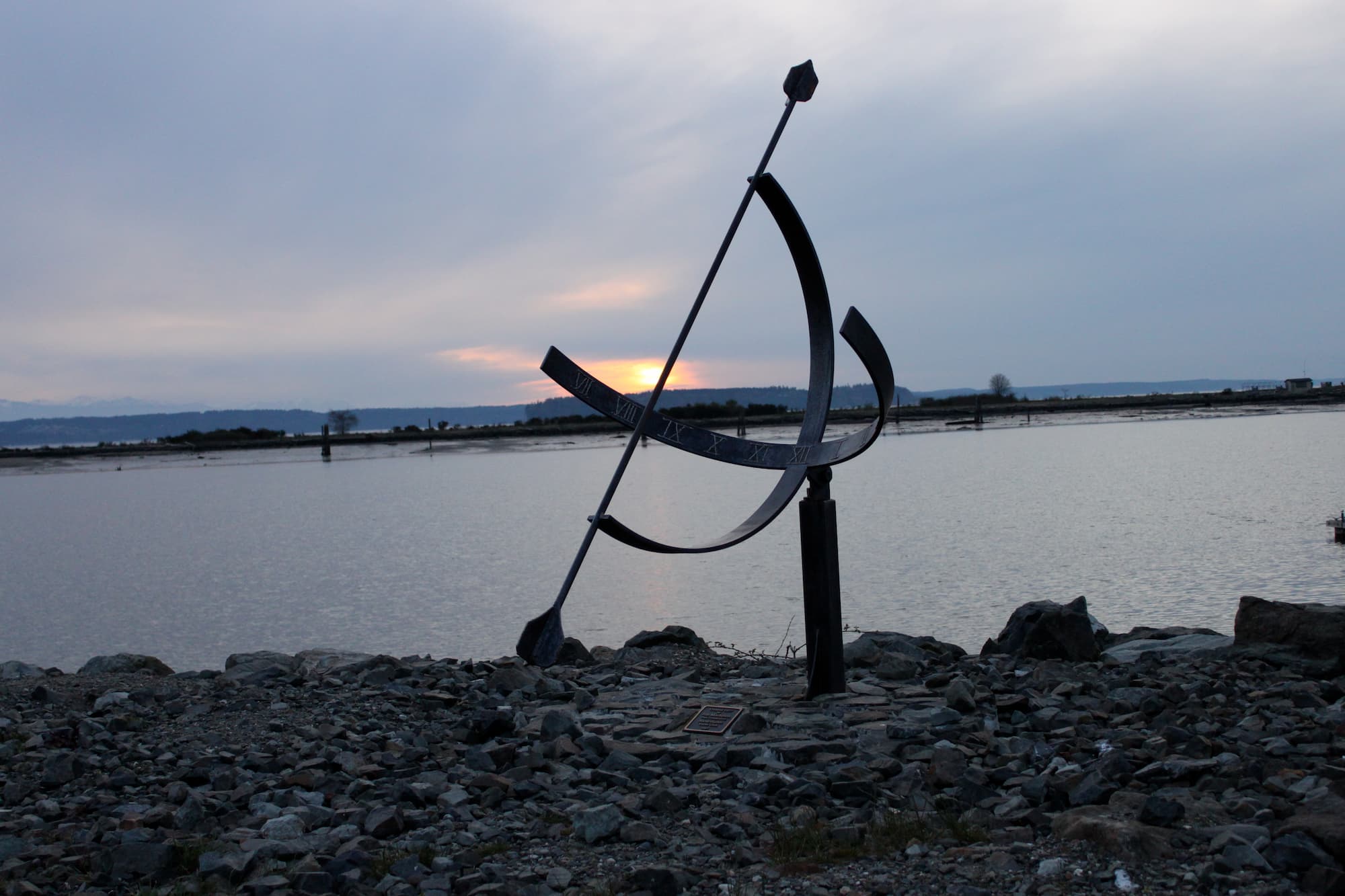
I have days when time seems to mosey along, like a river flowing slow and steady. Fifteen minutes between meetings feels ample, unhurried, full of possibility. And then there are other days when that same fifteen minutes evaporates before I’ve drawn a second breath.
So which is it? Is time scarce or abundant? Crawling or sprinting?
The answer, I’ve come to believe, is yes.
One of my favorite television programs as a child was Doctor Who. It aired at 7pm on PBS on weeknights — thirty minutes at a time, complete episodes spanning several hours, which meant getting the story told a little each day, always ending on a cliffhanger. If you missed an episode, it was simply gone. No streaming, no reruns on demand. Just the patient discipline of showing up each evening.
Since we’re getting the important details out of the way: my favorite Doctor was the Fourth, Tom Baker, with the Second Romana — Lalla Ward — as companion. I loved K9 and couldn’t stand Adric. And I actually met the Second Doctor, Patrick Troughton, at a Doctor Who convention in the eighties.
Doctor Who fed my imagination in ways I’m still discovering. The TARDIS could go anywhere in time — which meant anything was possible, and linear chronology was just one option among many. I credit that show with empowering my imagination to refuse the tyranny of the clock.
The Tenth Doctor put it this way:
“People assume that time is a strict progression of cause to effect, but actually from a non-linear, non-subjective viewpoint, it’s more like a big ball of wibbly wobbly, timey-wimey stuff.”
He trails off, of course. The idea gets away from him. Which feels about right.
In the summer of 2015, my experience of time during the Montana Equine Program gave me much to consider — and I’ve been pondering it ever since.
The program was six days. Six days that felt utterly expansive — more like six months of meaningful life lived. We were completely unplugged: no cell phones, no media, no schedule in any conventional sense. We were living outdoors, at the mercy of nature’s rhythms. Time wasn’t measured in hours and minutes. It was measured in sunrise, sun high, sun set.
That expansiveness made each day feel limitless. I don’t recall ever feeling rushed. There was time to breathe, to ponder, to sit inside wonder and awe. Time to experience the vastness of the human heart when it’s fully present to relationship — relationship with self, with others, with horses, with weather, with the particular quality of light in a Montana afternoon.
The program was built around a single discipline: full presence to the moment. Presence to relationship in the moment. And without the usual distractions, that presence became possible in a way I had never quite experienced before.
There is a word for this. Mindfulness. But experiencing it that completely made the word feel almost too small.
When I returned home, it felt as though I had been gone for six months. The clock said six days. My body and soul disagreed.
Years later, leading programs at Onsite Workshops, I began asking participants several days into a week-long group: How long does it feel like you’ve been here? Without fail, people would report it felt like at least a month. When we slow down and get fully present to each moment — with minimal distraction — time becomes extraordinarily expansive.
So much of time is a felt sense. The clock tells one story. The sun tells another. And the body, fully present, tells a third.
I have felt most at war with time during endings.
The last day of a lovely vacation. The knowledge that ordinary life is waiting on the other side of tomorrow morning. The wanting — irrational, insistent — for time to simply stop.
But I feel it most acutely when my cats come to the end of their lives.
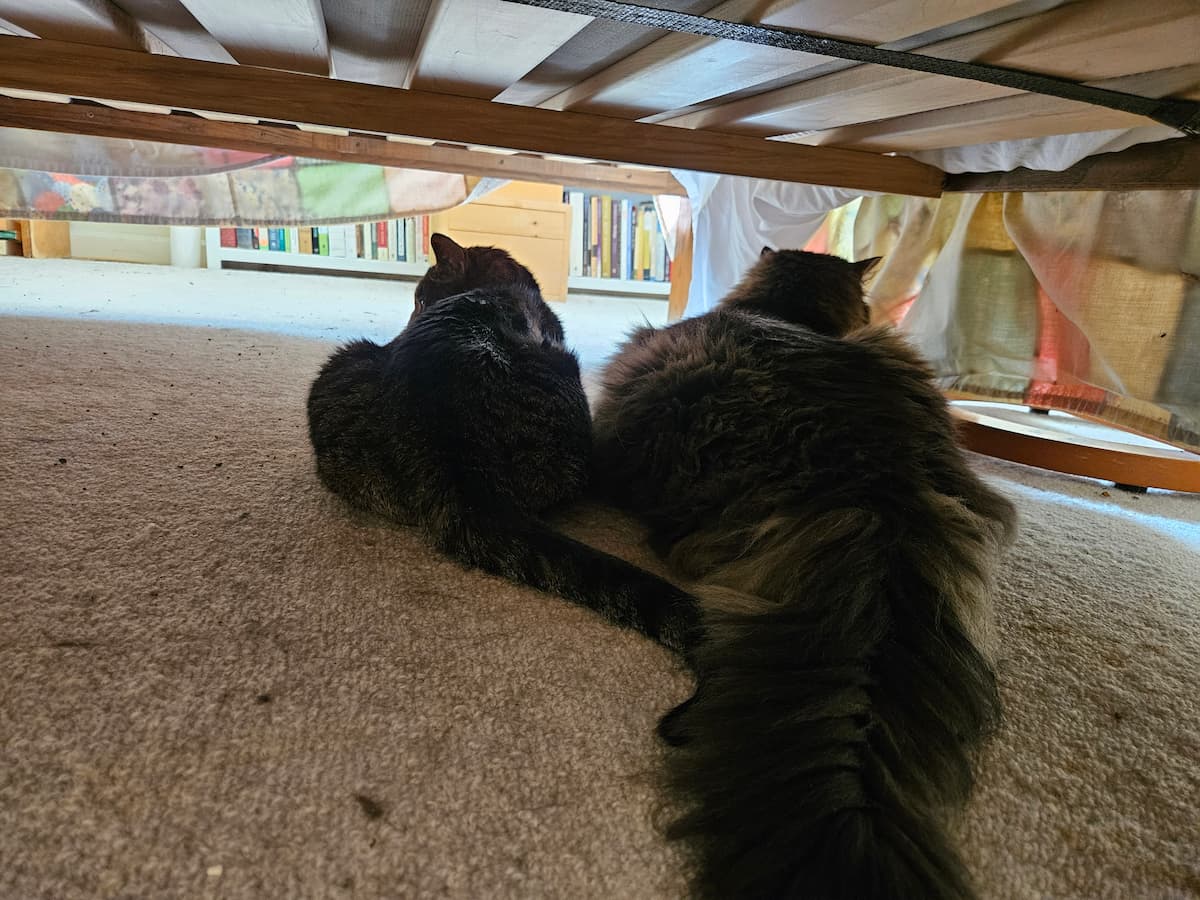
I remember Theo’s last day. He had congestive heart failure, which made breathing labored and difficult. He had retreated under the bed, the way cats do when they are suffering and want to be small and still. I got down on the floor and stayed with him. I wasn’t willing for him to be alone in his final hours.
He wasn’t alone in another sense either. Nahum — Theo’s inseparable companion — was there too. Not crowding. Just a gentle touch. Presence. The most powerful gift.
Nahum always knows. He lives into his name — one who brings comfort.
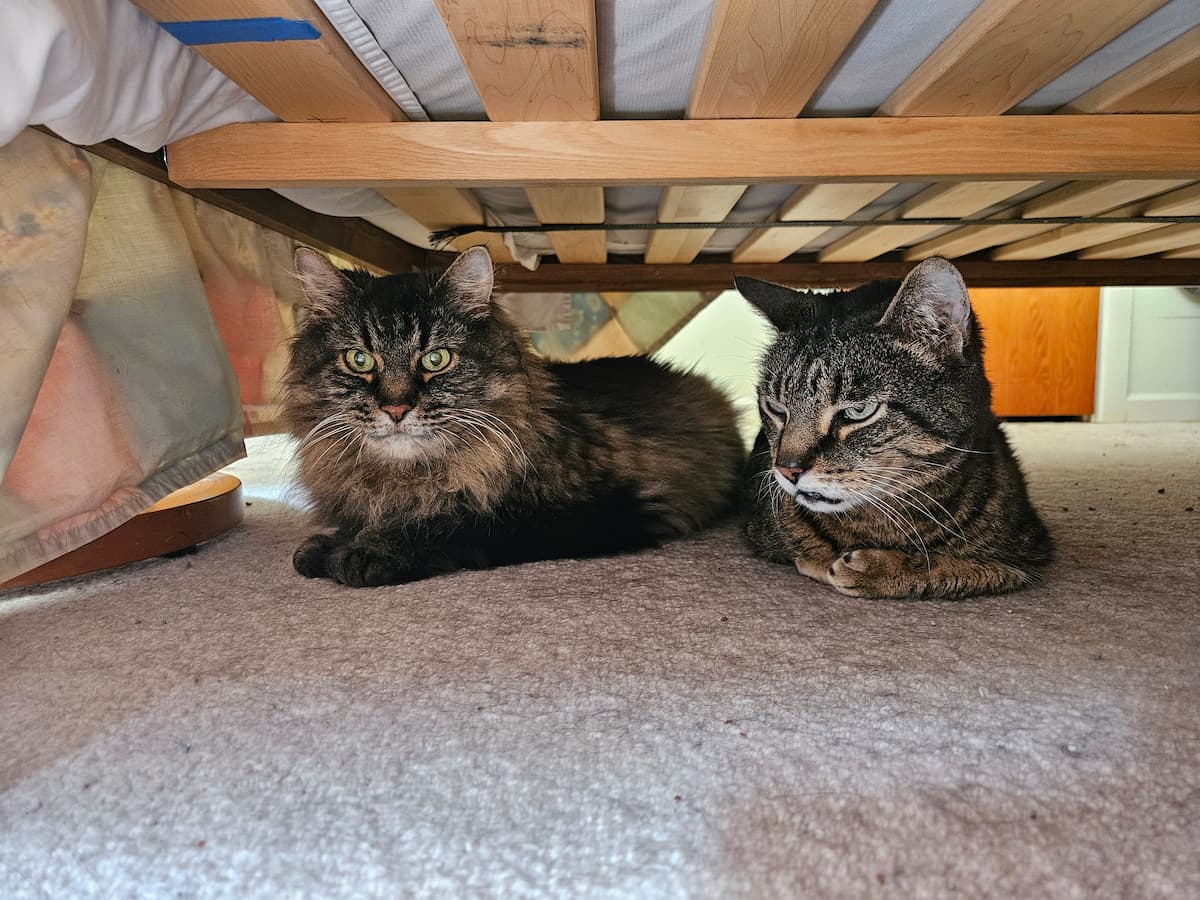
I lay there with them, remaining present as best I could, while the tears came forth and my mind moved restlessly between past memories — all the ordinary moments that suddenly felt precious and irreplaceable — and future thoughts of everything we would never share again. The grains of sand in the hourglass were running out, and I could do nothing but watch.
Time in those hours felt like agony. It crept. Watching Theo be so uncomfortable was agonizing, and part of me desperately wanted the appointment to come, for his suffering to end. And yet another part of me wasn’t ready. Couldn’t be ready. I wanted time to accelerate and to stop entirely — simultaneously — depending on which thought my mind had just landed on.
The two desires couldn’t both be true. And yet they were.
My office is my TARDIS.
In my work with clients, we travel in time — forward and back — regularly. I hear often: “I can’t change what happened.” And that’s true, in the sense that the event itself is fixed. But we can change how the event is experienced, how it gets encoded in the brain, how it gets integrated into the larger story of a life. In session, I’m often inviting the client to travel back to find a younger self who needed support they never received — and then traveling forward to show that child-self how things turn out.
Time, in the therapeutic hour, is anything but linear. It’s bumpy and looped and occasionally stops dead. The Second Doctor — Patrick Troughton, whom I once shook hands with at a convention in the eighties — described it this way:
“Time isn’t a straight line. It’s all bumpy-wumpy, and there are places where it goes all looped-around, and places where it just stops dead.”
He wasn’t wrong. And he wasn’t only talking about science fiction.
In the end, I’m left with this: time is not simply what is shown on a clock. Hours, minutes, seconds — these are a story we tell about time, not time itself.
As humans, we experience those units through the filter of emotion, attention, and consciousness. Time is relative — not just in the Einsteinian sense, but in the deeply personal sense of how we show up to meet it.
Six days in Montana that felt like six months. A week at Onsite that felt like a lifetime. An afternoon under a bed with a dying cat that lasted forever and ended too soon.
The wibbly wobbly truth is this: the quality of our presence shapes the experience of our time. When we are fully here — distracted by neither past nor future — time opens up. When we are split, divided, rushing, dreading, clinging — it either drags or disappears.
I haven’t mastered this. I was lying on the floor with Theo, and my mind was everywhere but there. But I kept coming back. That’s perhaps all mindfulness really asks: not perfect presence, but the willingness to keep returning to it.
The TARDIS is always available. The question is whether we’re willing to step inside.